
MICROBIAL SYSTEMS & HUMAN INTERFACES
Decoding the Microbial Drivers of Human Health
MSHI Lab unites microbiome science, advanced technology and a deep sensitivity toward people — translating discovery into innovation that is rigorous, human-centered, and meaningful in everyday life.
12+
Active studies
4+
Research partners
2026
Founded
VISION
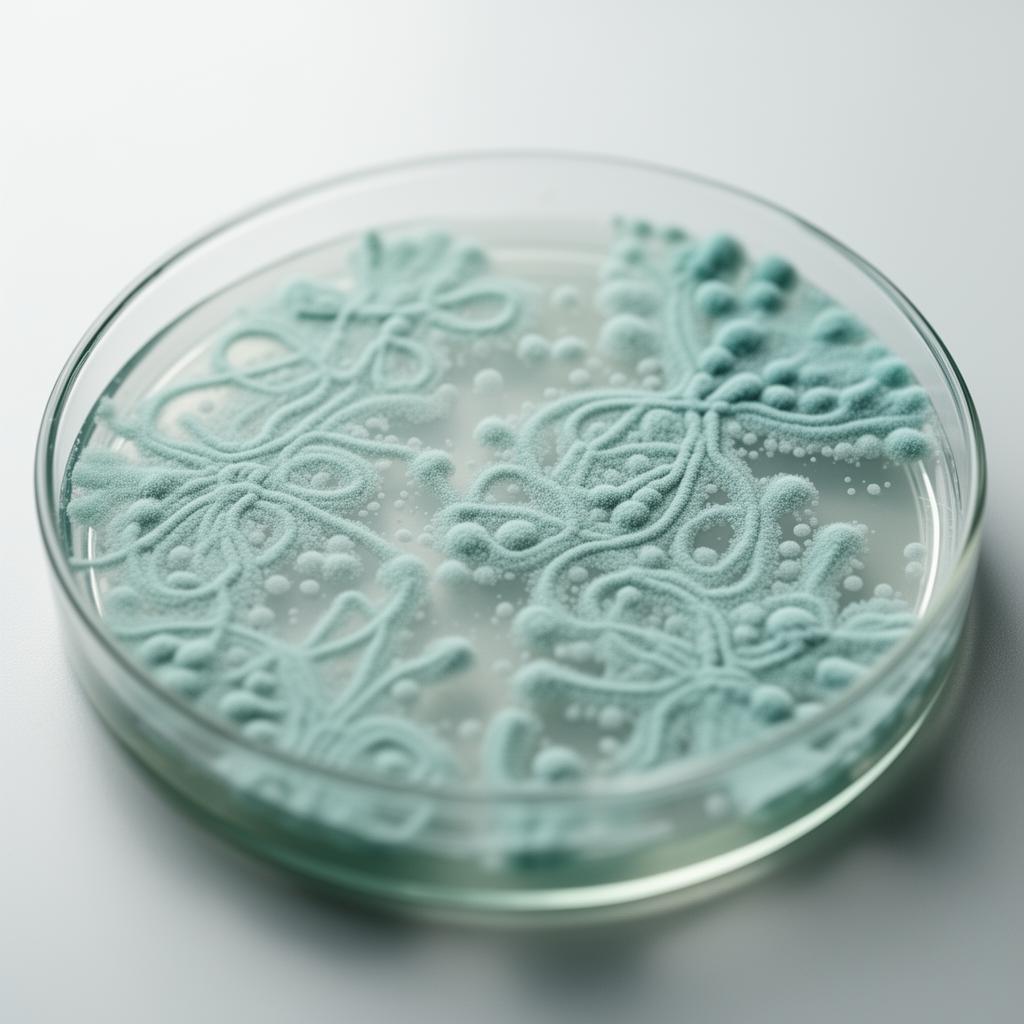
From Microbial Ecosystems to Systemic Signals
The lab is positioned as a translational microbiology platform, with the goal of moving from the identification of microbial signals to their mechanistic understanding and ultimately to their clinical targeting. The core idea is that microbial systems do not just associate with disease but actively control disease trajectories

MICROBIOME
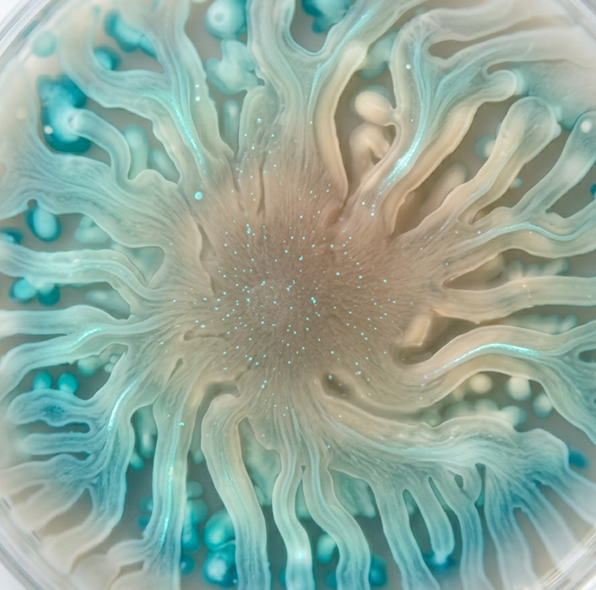
Microbial Function Is Defined by State
Microbial behavior is not fixed it is dynamically programmed by the environment.
The same organism can activate completely different functional programs depending on context whether it is in isolation, in a structured community, or within a complex host ecosystem. So function is not defined by composition it is defined by state”.
HUMAN INTERFACE
Microbial Signals Across the Gut–Brain Axis
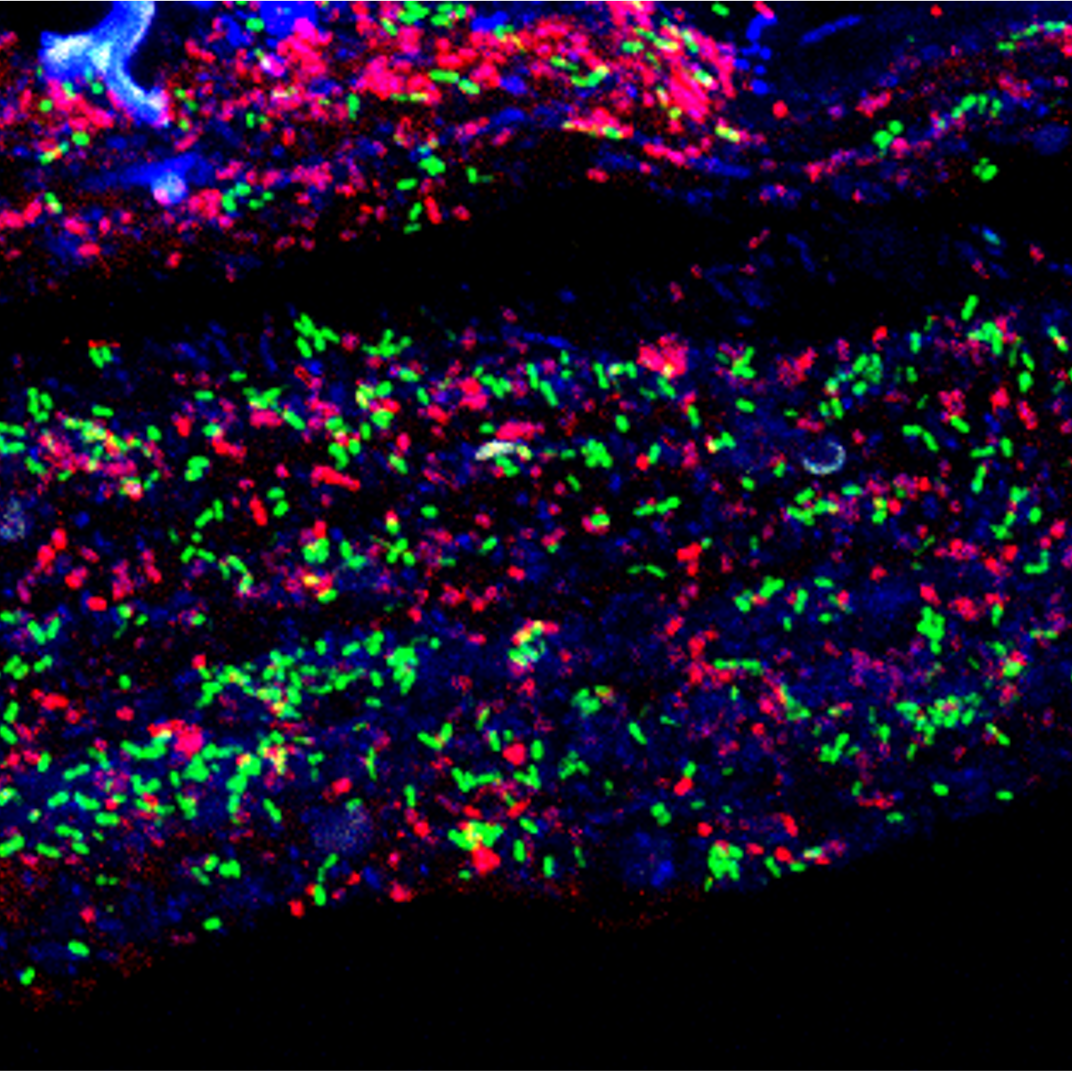
At MSHI, we frame microbiology as a system that operates across compartments.
Microbial communities generate metabolites and bacterial extracellular vesicles (BEVs) that act as biological messengers.
Through the gut–brain axis, these signals travel across the body, influencing behavior.
Research areas
Four disciplines, one continuous
question how do we live well, longer?
IBD
Mapping the microbial ecosystems that shape human health, immunity and cognition.
CRC (ARGOS)
Designing intelligent systems that augment clinicians and respect patient agency.
Infections (BRAVE)
Mapping the microbial ecosystems that shape human health, immunity and cognition.
Gut-Brain Axis (GIPSY )
Decoding neural signals to build adaptive, human-centered interfaces.
SELECTED PUBLICATIONS
Peer-reviewed work from the laboratory and our partners.
Gut–Brain Axis and Barrier Biology
Carloni S., Bertocchi A., Mancinelli S., Bellini M., Erreni M., Borreca A., Braga D., Giugliano S., et al.
Identification of a choroid plexus vascular barrier closing during intestinal inflammation.
Science, 2021.
Carloni S., Rescigno M.
Unveiling the gut-brain axis: structural and functional analogies between the gut and the choroid plexus vascular and immune barriers.
Seminars in Immunopathology, 2022.
Carloni S., Rescigno M.
The gut-brain vascular axis in neuroinflammation.
Seminars in Immunology, 2023.
Nature Microbiology
Microbiota, Immunity and Host–Microbe Interactions
Giugliano S., Gatti A., Rusin M., Schorn T., Pimazzoni S., Calanni-Pileri M., Fraccascia V., Carloni S., Rescigno M.
Maternal gut microbiota influences immune activation at the maternal-fetal interface affecting pregnancy outcome.
Nature Communications, 2025.
Pietrasanta C., Carlosama C., Lizier M., Fornasa G., Jost T.R., Carloni S., Giugliano S., et al.
Prenatal antibiotics reduce breast milk IgA and induce dysbiosis in mouse offspring, increasing neonatal susceptibility to bacterial sepsis.
Cell Host & Microbe, 2024.
Silvestri A., Gil-Gomez A., Vitale M., Braga D., Demitri C., Brescia P., et al.
Biomimetic superabsorbent hydrogel acts as a gut protective dynamic exoskeleton improving metabolic parameters and expanding Akkermansia muciniphila.
Cell Reports Medicine, 2023.
Darwich A., Pozzi C., Fornasa G., Lizier M., Azzolini E., Spadoni I., et al.
BNT162b2 vaccine induces antibody release in saliva: a possible role for mucosal viral protection?
EMBO Molecular Medicine, 2022.
Bertocchi A., Carloni S., Ravenda P.S., Bertalot G., Spadoni I., Lo Cascio A., et al.
Gut vascular barrier impairment leads to intestinal bacteria dissemination and colorectal cancer metastasis to liver.
Cancer Cell, 2021.
Zagato E., Pozzi C., Bertocchi A., Schioppa T., Saccheri F., Guglietta S., et al.
Endogenous murine microbiota member Faecalibaculum rodentium and its human homologue protect from intestinal tumour growth.
Nature Microbiology, 2020.
Burrello C., Garavaglia F., Cribiù F.M., Ercoli G., Lopez G., Troisi J., et al.
Therapeutic faecal microbiota transplantation controls intestinal inflammation through IL10 secretion by immune cells.
Nature Communications, 2018.
Cell Reports Medicine
Microbial Pathogenesis, Antimicrobial Resistance and Biofilms
Blanco-Míguez A., Carloni S., Cardenas C., Dioguardi C.C., Lambroia L., Capretti G., et al.
Microbial composition associated with biliary stents in patients undergoing pancreatic resection for cancer.
npj Biofilms and Microbiomes, 2024.
Morosi L., Golzato D., Bussini L., Guma H., Tordato F., Armanini F., et al.
Distinct chromosomal mutation associated with cefiderocol resistance in Acinetobacter baumannii: a combined bioinformatics and mass spectrometry approach to unveil and validate the in vivo-acquired chemoresistance.
Frontiers in Microbiology, 2024.
Carloni S., Macchi R., Sattin S., Ferrara S., Bertoni G.
The small RNA ReaL: a novel regulatory element embedded in the Pseudomonas aeruginosa quorum sensing networks.
Environmental Microbiology, 2017.
Ferrara S., Carloni S., Fulco R., Falcone M., Macchi R., Bertoni G.
Post-transcriptional regulation of the virulence-associated enzyme AlgC by the σ22-dependent small RNA ErsA of Pseudomonas aeruginosa.
Environmental Microbiology, 2015.
Cell Reports Medicine
Featured Publication
Carloni S., Bertocchi A., Mancinelli S., Bellini M., Erreni M., Borreca A., Braga D., Giugliano S., et al.
Identification of a choroid plexus vascular barrier closing during intestinal inflammation.
Science, 2021.
This study identified the existence of a previously unrecognized vascular barrier within the choroid plexus that dynamically responds to intestinal inflammation. Using mouse models, imaging approaches, transcriptomics, we demonstrated that intestinal inflammation induces the closure of the choroid plexus vascular barrier, limiting the entry of circulating molecules into the brain.
These findings revealed a novel mechanism through which peripheral inflammatory signals are communicated to the central nervous system and established the choroid plexus as a critical interface in gut–brain communication. The study provided the first evidence for a functional gut–brain vascular axis and laid the foundation for ongoing investigations into the role of microbial signals, bacterial extracellular vesicles, metabolites, and immune mediators in neurological and neuropsychiatric disorders.
Cell Reports Medicine
CONTACT
Begin a conversation.
For research partnerships, clinical collaborations, press or general inquiries. We read every message
E M A I L
sara.carloni@hunimed.eu
L O C A T I O N
BLDG C, Humanitas University Campus, Pieve Emanuele (Milan)
O T H E R C O N T A C T
LinkedIn X ResearchGate